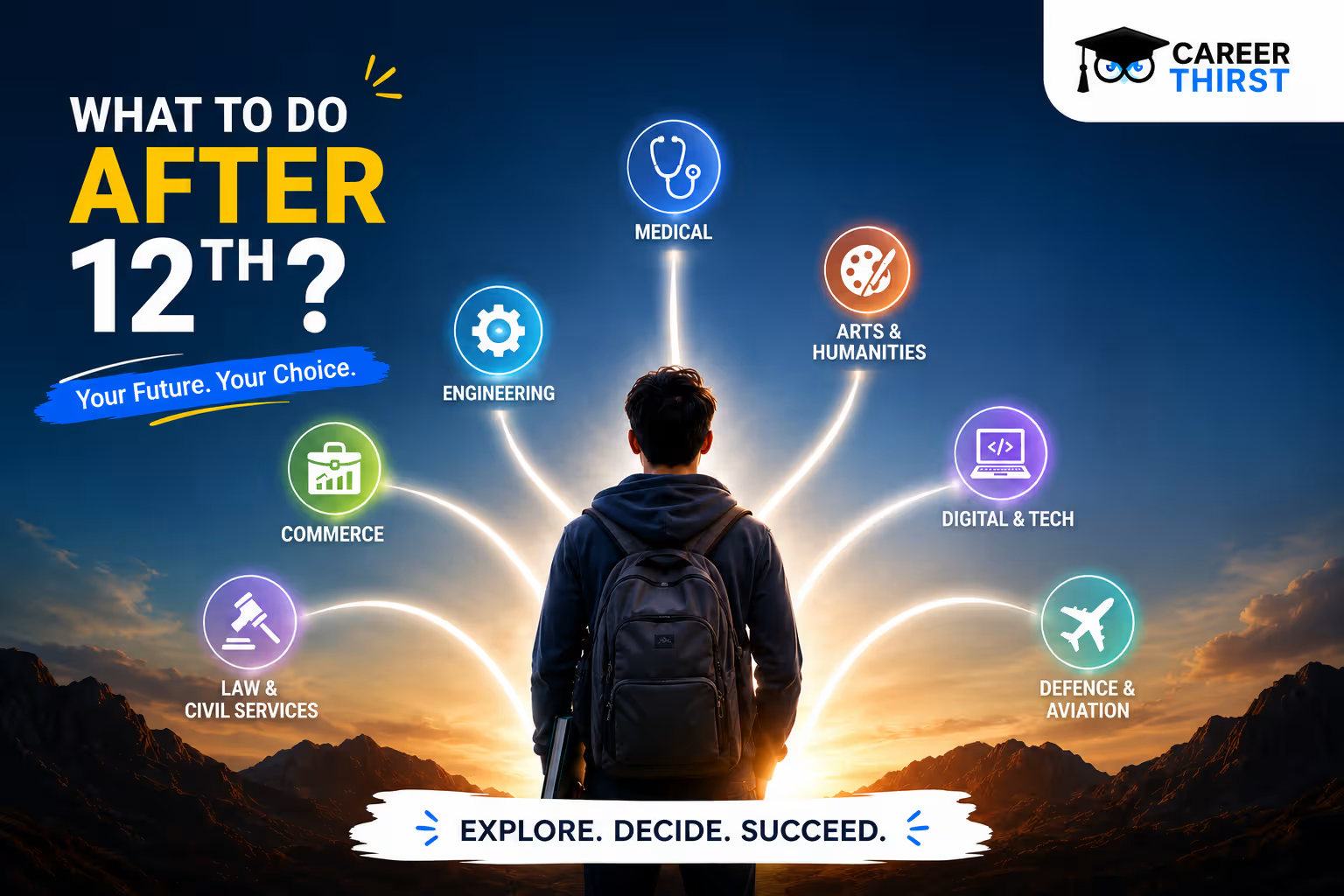
There is a strange kind of silence that hits the moment your 12th board exams get over. For months, your entire world revolved around syllabus completion, mock tests, and revision schedules, and suddenly all of that just stops. In its place comes a much bigger and far less structured question, what to do after 12th? If you’re sitting with that question right now, feeling unsure, anxious, or even a little lost, this guide is written exactly for you.
This is not going to be another generic list of courses. Instead, this is a roadmap that walks you through how to actually think about this decision, what your real options are, and how to move forward even if you still feel completely confused.
Why Feeling Confused After 12th Is Completely Normal
Most students assume that everyone else has it figured out except them. The truth is quite the opposite. Almost every student who finishes 12th goes through some version of confusion, whether it’s about which stream-based career to pursue,which entrance exam to prepare for, or whether to take a gap year altogether. The pressure to decide quickly often comes from family expectations, social comparison, or simply not knowing how many options actually exist. Understanding that this confusion is normal is the first step toward making a calmer, more thoughtful decision rather than a rushed one.
Step One: Understand Your Stream-Based Options
Before exploring what to do after 12th, it helps to get clarity on what your stream naturally opens up for you, since this becomes the foundation for almost every decision that follows.
If You Are From Science (PCM)
Students with Physics, Chemistry, and Mathematics usually move toward engineering, architecture, defence services, or aviation. This stream is known for building strong analytical skills, which is why it also opens doors into emerging fields like data science, robotics, and artificial intelligence, areas that are seeing rapid growth heading into 2026.
If You Are From Science (PCB)
Biology students typically consider medicine through NEET, but the options extend much further into nursing, biotechnology, veterinary science, and allied health courses. Healthcare remains one of the most stable and respected career directions, regardless of which specific path within it you choose.
If You Are From Commerce
Commerce students often default to thinking their only options are CA or an MBA, but the field has expanded into digital marketing, banking, finance, actuarial science, and entrepreneurship. With businesses moving online, commerce graduates with digital skills are seeing strong demand from companies of every size.
If You Are From Arts or Humanities
This stream is frequently underestimated, yet it leads to some of the most dynamic careers available, including law, psychology, journalism, civil services, and design. Arts students also have the advantage of flexibility, since many emerging careers value communication and critical thinking skills over specific technical degrees.
Step Two: Decide Between College, Skill Courses, or a Gap Year
Once you understand your stream natural direction, the next big question in figuring out what to do after 12th is deciding the format of your next step.
Going the Traditional College Route
A bachelor’s degree still holds strong value in India, particularly for fields like medicine, law, engineering, and government services where formal qualifications are mandatory. If your goal involves a structured profession with clear entry requirements, college remains the most reliable path forward.
Choosing Skill-Based or Certification Courses
Not every successful career requires a traditional degree anymore. Fields like UI/UX design, digital marketing, ethical hacking, and content creation often value practical skills and portfolios over formal qualifications. For students who learn better through hands-on practice rather than classroom theory, certification-based learning can be a faster and more cost-effective route into the workforce.
Considering a Gap Year
Taking a gap year sometimes carries a stigma in Indian households, but when used intentionally, it can be incredibly valuable. Whether it’s for serious entrance exam preparation, building a skill, gaining work experience through an internship, or simply taking time to think clearly without pressure, a well-planned gap year is not the same as wasting time. The key difference lies in having a clear purpose rather than just waiting around.
Step Three: Research Entrance Exams You Might Need
Many of the strongest career options after 12th require clearing a specific entrance exam, so it’s worth identifying these early so you can prepare with enough time.
Engineering aspirants typically need JEE Main or JEE Advanced for top institutions, while medical aspirants require NEET for MBBS, BDS, and related courses. Law students need to prepare for CLAT, and commerce students aiming for top business schools eventually look toward exams like CAT after completing their undergraduate degree. Even design and architecture have their own dedicated entrance tests like NATA and UCEED. Knowing which exam aligns with your goals helps you build a focused preparation timeline instead of spreading yourself thin across too many options.
Step Four: Talk to People Who Are Actually Doing What You Are Considering
One of the most underrated steps when figuring out what to do after 12th is simply having honest conversations with people already working in fields you’re curious about. Reading about a career online rarely captures the day-to-day reality the way a real conversation does. Reach out to seniors, family friends, or professionals on LinkedIn, and ask them genuine questions about what they enjoy and what they find frustrating about their work. This kind of insight often reveals things that brochures and websites never mention.
Step Five: Be Honest About What You’re Actually Good At
It’s tempting to choose a career path based on what sounds impressive or what pays well on paper, but ignoring your actual strengths usually backfires later. Take a moment to reflect on subjects you genuinely enjoyed, tasks that didn’t feel like work even when they were difficult, and skills people often compliment you on. This kind of self-awareness, even if it feels a little uncomfortable at first, tends to lead to far better long-term career satisfaction than chasing trends or following the crowd.
Common Mistakes Students Make While Deciding What to Do After 12th
A lot of regret later in life traces back to a few avoidable mistakes made right after 12th. Choosing a course simply because friends are doing it often leads to disinterest once the initial excitement fades. Ignoring financial realities, like the cost of coaching or private colleges, can create unnecessary stress on families. Rushing into a decision out of fear of “wasting time” frequently leads to switching streams later anyway, which ends up costing more time in the long run. And underestimating newer career fields just because parents or relatives aren’t familiar with them can cause students to overlook genuinely promising opportunities.
Emerging Career Paths Worth Exploring in 2026
If you are still unsure what to do after 12th, it is worth looking beyond the traditional paths your school or family might be pushing you toward. Data analytics is growing rapidly across every industry, since businesses increasingly rely on data-driven decisions. Cybersecurity has become essential as digital threats increase, creating strong demand for ethical hackers and security analysts. Content creation has evolved into a legitimate full-time career for many young Indians, generating income through platforms, brand partnerships, and personal businesses. UI/UX design continues to be valuable as more companies prioritise digital user experience. And sustainability-focused careers, including renewable energy and environmental science, are gaining momentum as climate awareness grows globally.
How to Build a Simple Decision-Making Framework
Instead of trying to find the single “perfect” answer to what to do after 12th, it often helps to use a simple framework. Start by listing three to five options that genuinely interest you, regardless of how realistic they seem at first. Research the actual day-to-day work involved in each, not just the glamorous parts. Compare the time and financial investment required for each path honestly. Talk to at least one real person working in each field if possible. And finally, choose the option that excites you the most while still feeling practical enough to commit to for the next few years. This process won’t guarantee a perfect decision, but it dramatically reduces the chances of choosing something purely out of panic or peer pressure.
What If You Still Don’t Know What to Do After 12th?
If you have gone through all of this and you are still unsure, that’s okay too. Many successful professionals didn’t have their career figured out perfectly at eighteen. Some discovered their path through trial and error, switching fields once or even twice before finding something that truly fit. The goal at this stage isn’t to find a lifelong, unchangeable answer, it’s to take one reasonable, well-thought-out step forward. Career paths today are far more flexible than they used to be, and switching directions later in life has become increasingly common and accepted rather than something to be ashamed of.
Final Thoughts
Figuring out what to do after 12th doesn’t have to feel like solving an impossible puzzle. It’s a decision that deserves thought, research, and honest self-reflection, but it doesn’t need to be perfect on the first attempt. Talk to people, explore your stream’s natural options, stay open to newer career paths, and most importantly, trust that taking one thoughtful step is far better than staying frozen in indecision. Wherever you land, remember that this is just the beginning of a much longer journey, and there’s plenty of room ahead to adjust, grow, and even change course entirely if needed.
Frequently Asked Questions
What should I do after 12th if I am confused about my career?
If you are confused about what to do after 12th, start by listing the subjects and activities you genuinely enjoy, then research career paths connected to them instead of choosing based on what others are doing. Talking to professionals already working in fields you are curious about, along with taking time to compare college options, skill-based courses, and entrance exams, can help you make a calmer and more informed decision rather than a rushed one.
What are the best career options after 12th science?
Science students have a wide range of career options after 12th, including engineering, medicine, architecture, aviation, biotechnology, and defence services. PCM students often move toward engineering and technology fields, while PCB students typically explore medicine, nursing, veterinary science, and allied health courses, depending on their interests and entrance exam performance.
Can I take a gap year after 12th? Is it a good idea?
Yes, taking a gap year after 12th can be a good idea if it is used with a clear purpose, such as serious entrance exam preparation, building a specific skill, or gaining work experience through an internship. A gap year only becomes a problem when it lacks direction, so having a structured plan makes all the difference between a productive break and lost time.
What to do after 12th if I don't want to do engineering or medical?
Students who do not want to pursue engineering or medical have plenty of alternatives, including commerce-based careers like CA and digital marketing, arts-based paths like law and psychology, or skill-based fields like UI/UX design, data analytics, and content creation. These options often value practical skills and genuine interest just as much as a specific degree.
What are the highest paying careers after 12th in India?
Some of the highest paying careers after 12th in India include engineering specialisations like AI and data science, chartered accountancy, law, actuarial science, and merchant navy. Emerging fields such as cybersecurity, UI/UX design, and digital marketing are also offering strong salaries, especially for students who build practical skills early.
Which course is best after 12th commerce without maths?
Commerce students without maths can still pursue strong career paths like BA in Economics, BBA, Company Secretary, hotel management, journalism, or digital marketing, since many of these fields focus more on analytical and communication skills than advanced mathematics. CA and CMA may require additional preparation in quantitative subjects, but they remain accessible with the right guidance.
What to do after 12th arts to get a good job?
Arts students after 12th have strong career options including law, psychology, journalism, civil services, and design fields like fashion or interior design. With the right specialisation and skill development, arts graduates are increasingly finding well-paying opportunities in HR, content, media, and public policy sectors as well.
How to choose the right career after 12th?
Choosing the right career after 12th involves understanding your natural strengths, researching the realistic day-to-day work involved in different fields, talking to people already working in those careers, and weighing the time and financial investment each path requires. A simple framework of shortlisting a few options and comparing them honestly often works better than searching for one “perfect” answer.
What are some skill-based courses after 12th without a degree?
Skill-based courses after 12th that do not require a traditional degree include UI/UX design, digital marketing, ethical hacking, graphic design, content creation, and coding bootcamps. These fields often prioitise practical portfolios and certifications over formal degrees, making them attractive for students who prefer hands-on learning.
What to do after 12th if I fail to clear JEE or NEET?
Not clearing JEE or NEET doesn’t mean your options are over, since students can explore state-level engineering and medical entrance exams, private colleges, allied health courses like nursing and pharmacy, or completely different fields like commerce, design, or skill-based careers. Many successful professionals didn’t get their first-choice exam result and still built strong careers through alternative paths