Choosing a career is one of the biggest decisions in a student’s life. Yet, most students make this decision based on marks, family pressure, friends, or social media trends. That is why thousands of students regret their course or career within just a few years.
This is where career counselling for students becomes important. It helps students understand themselves before choosing a career. Instead of asking, “Which course is best?” a good counsellor asks, “Which career is best for you?”
If you are studying in Class 10, Class 11, or Class 12, this guide will help you understand why career counselling matters, how it works, and why getting professional guidance can save years of confusion.
Why Students Get Confused About Their Career
Every student has different interests, strengths, and learning styles. But our education system often expects everyone to follow the same path.
Some students choose engineering because their relatives did. Others take commerce because their friends selected it. Many pick science thinking it offers more opportunities, even when they have no interest in it.
The real problem is not the lack of career opportunities. The problem is choosing without enough information.
Today, there are hundreds of careers across technology, healthcare, design, business, media, law, psychology, sports, finance, and many other fields. Without proper guidance, students only know about a small percentage of these options.
What Is Career Counselling for Students?
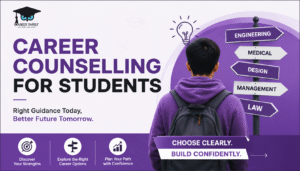
Career counselling for students is a structured process that helps students choose the right education and career path based on their personality, interests, abilities, values, and long-term goals.
It is not about telling a student to become a doctor, engineer, lawyer, or entrepreneur. Instead, it helps students discover careers where they are more likely to perform well and stay satisfied for years.
A professional counsellor studies different aspects of a student’s profile before making recommendations. The goal is to reduce confusion and increase confidence while making career decisions.
The Biggest Mistake Students Make Before Choosing a Career
Many students spend months comparing colleges but spend only a few hours understanding themselves.
Imagine buying a pair of shoes without knowing your size. Even the most expensive shoes will feel uncomfortable.
Choosing a career works the same way.
The first step should never be selecting a college or course. It should be understanding your strengths, interests, and natural abilities.
When students skip this step, they often realise after graduation that they chose the wrong field.
Career Options After 12th Are Much Bigger Than Most Students Think
One of the biggest myths is that there are only a few career choices after school.
The reality is completely different.
The list of career options after 12th has grown rapidly over the last decade. Along with traditional careers, industries now require professionals in areas that did not even exist a few years ago.
Students interested in creativity can explore fields like UI/UX design, animation, digital marketing, game design, content strategy, filmmaking, and product design.
Students who enjoy technology have opportunities in artificial intelligence, cybersecurity, cloud computing, robotics, software development, and data science.
Commerce students can build careers in finance, investment banking, business analytics, entrepreneurship, international business, taxation, and financial planning.
Humanities students now have opportunities in psychology, public policy, international relations, journalism, social research, behavioural science, law, and policy consulting.
The right career is not the one with the highest salary. It is the one that matches your skills while offering long-term growth.
How Career Counselling Helps Students Make Better Decisions
Career counselling is not a single conversation.
It is a step-by-step process that helps students understand themselves before making important academic decisions.
A counsellor first understands the student’s interests, strengths, learning style, goals, and personality. This creates a clear picture of the student’s natural potential.
The next stage focuses on exploring suitable career paths instead of randomly searching online.
Students also learn about future job roles, required qualifications, expected salaries, industry demand, and skill requirements.
Finally, the counsellor creates a practical roadmap showing which subjects, entrance exams, colleges, certifications, and skills the student should focus on.
Instead of feeling confused, students leave with a clear action plan.
Why Searching on Google Is Not Enough
Students often spend weeks watching career videos or reading blogs online.
The problem is that online content is made for everyone.
Career decisions are personal.
A video explaining the “Top 10 Careers” cannot tell whether those careers are suitable for your personality.
A student who loves solving problems may enjoy engineering, while another student with the same marks may be happier in psychology or design.
General information creates awareness.
Career counselling creates clarity.
How Online Career Counselling Is Changing Student Decisions
Technology has made professional guidance available from anywhere.
With online career counselling, students no longer need to travel to another city to meet experienced counsellors.
Students can attend counselling sessions from home, complete career assessments online, discuss their doubts through video calls, and receive personalised career reports digitally.
Parents can also join these sessions, making the decision-making process more transparent and comfortable.
This approach saves time while giving students access to experts who may not be available in their local area.
The Conversation Every Student Should Have Before Choosing a Career
Most students ask only one question.
“What should I become?”
A better question is:
“What kind of work will keep me interested even after ten years?”
This small change completely changes the career selection process.
Instead of chasing job titles, students begin thinking about the type of problems they enjoy solving, the environment they prefer, and the skills they naturally develop.
When career counselling starts with these questions, the recommendations become far more meaningful.
Career Counselling Is Not About Predicting the Future
Many students expect counsellors to tell them the perfect career.
No counsellor can predict the future with certainty.
A good counsellor helps students make better decisions using available information, scientific assessments, industry trends, and self-awareness.
Career counselling reduces the chances of making the wrong decision. It does not promise a shortcut to success.
The final choice always belongs to the student.
Signs That a Student Needs Career Counselling
Some students clearly know what they want, while others struggle with uncertainty.
If you constantly change your career choice every few weeks, feel pressured by family expectations, cannot decide between multiple courses, or worry about making the wrong decision, professional guidance can help.
Career counselling is also useful for students who already have a career goal but want to verify whether it matches their strengths.
Seeking guidance is not a sign of confusion.
It is a sign that you want to make an informed decision.
Parents Also Play an Important Role
Parents naturally want the best future for their children.
However, career choices based only on job security or family tradition may not always lead to long-term satisfaction.
The most successful career decisions usually happen when parents and students discuss options openly with a career counsellor.
Instead of convincing each other, they understand each other’s concerns and work towards a practical solution.
This creates confidence for both the student and the family.
What Happens After a Career Counselling Session?
Many students think the counselling process ends after receiving career suggestions.
In reality, that is where the journey begins.
Students receive a roadmap explaining which subjects to choose, which entrance exams to prepare for, which colleges match their goals, and which skills they should start building early.
This roadmap turns confusion into action.
Instead of wondering what to do next, students know exactly what steps they should take over the coming months and years.
Choosing the Right Time for Career Counselling
Students often wait until board exam results are announced.
By then, many admission deadlines have already started.
The ideal time for career counselling is before selecting subjects in Class 11 or before making decisions about higher education after Class 12.
Starting early gives students enough time to prepare for entrance exams, improve important skills, and explore different career opportunities without pressure.
Conclusion
Choosing a career should never be based on guesswork.
The world has changed, and career decisions have become more complex than ever before. Students now have access to hundreds of career paths, but more choices also mean more confusion.
Professional career counselling for students helps remove this confusion by focusing on who the student is rather than what others expect them to become.
Whether you are exploring career options after 12th or looking for the convenience of online career counselling, the right guidance can help you avoid costly mistakes and build a career that matches your strengths, interests, and future goals.
Your career is not just about earning a living. It is about building a life you will enjoy for years to come. Choosing wisely today can make all the difference tomorrow.