College admission is an important step in a student’s academic and career journey. The choice of college and course can affect future career opportunities, skills, placements, and higher education options.
Many students make avoidable mistakes during the admission process. Some choose a course without understanding their interests. Others select a college based only on its name, miss important deadlines, ignore eligibility rules, or fail to check the total cost of education.
Knowing the most common college admission mistakes can help students make better decisions and avoid problems during the admission process.
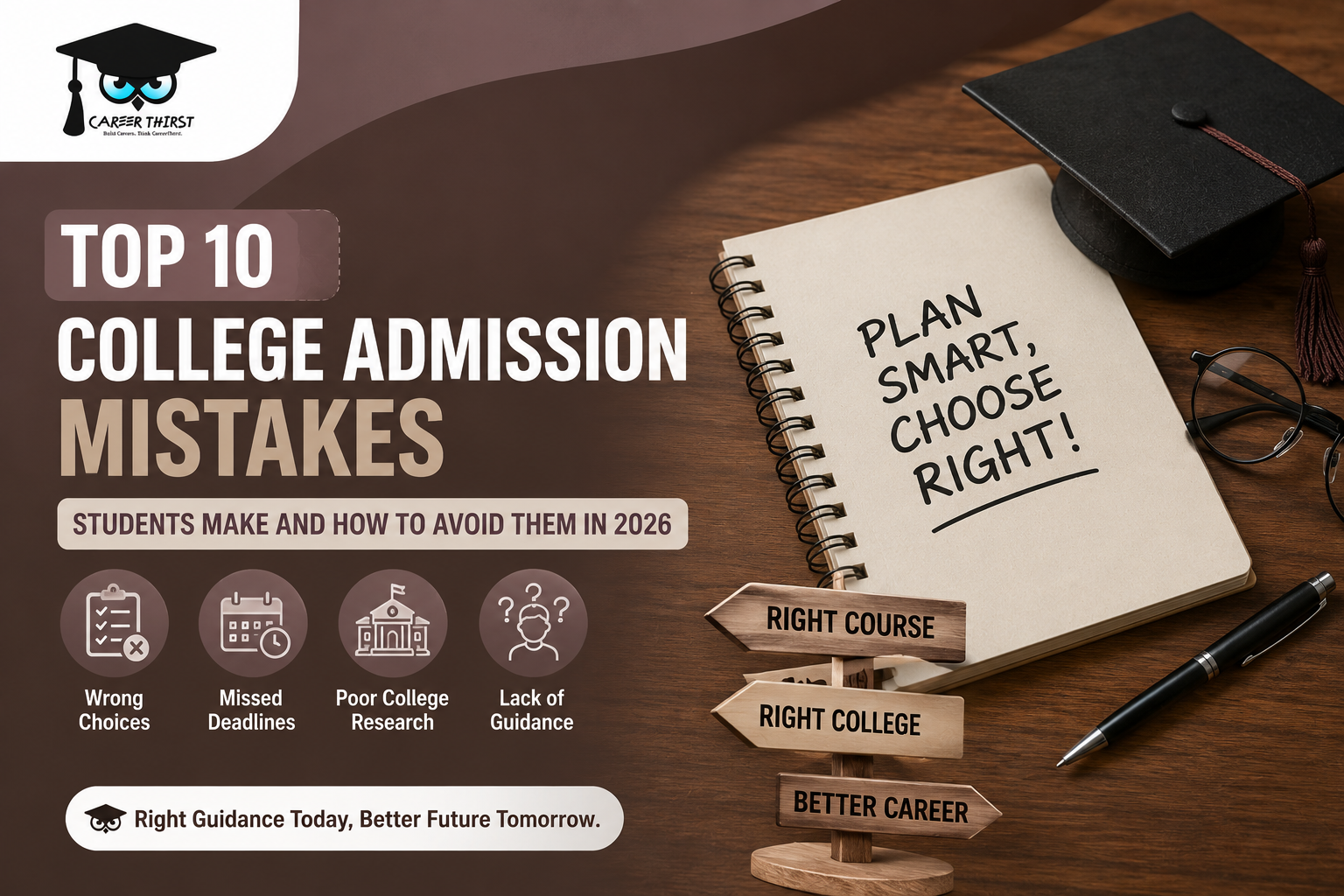
Here are the top 10 mistakes students should avoid in 2026.
1. Choosing a College Without Proper Research
One of the most common college admission mistakes is choosing a college without checking important details.
A college may be popular, but that does not mean it is the right choice for every student. Students should check the course curriculum, faculty, accreditation, campus facilities, placement record, location, fees, and admission requirements before applying.
The official college or university website should be the first source for checking admission information. Students should also compare different colleges before making a final decision.
2. Choosing a Course Based on Trends or Pressure
Choosing a course only because it is popular can create problems later. Students sometimes select a course because their friends are choosing it or because their family recommends it.
The right course should match the student’s interests, academic background, skills, and career goals.
For example, a student interested in technology may explore computer science, information technology, or related fields. A student interested in business may consider management, commerce, or finance programs.
Career counselling can help students understand their strengths and explore suitable career options before selecting a course.
3. Ignoring College Eligibility Criteria
Every college and course has specific eligibility requirements. These may include minimum marks, required subjects, entrance exams, age limits, or other admission conditions.
Applying without checking eligibility can result in application rejection and wasted time.
Before applying, students should carefully check:
- Required academic qualifications
- Minimum marks
- Required subjects
- Entrance examination requirements
- Category-specific requirements
- Documents required for admission
Understanding the eligibility criteria early can make the college admission process easier.
4. Missing Admission Deadlines
Missing an admission deadline can mean losing the opportunity to apply to a preferred college or course.
Admission dates can vary between universities, colleges, entrance exams, and counselling processes. Students should track every important date instead of depending on last-minute reminders.
Creating an admission calendar can help students manage application deadlines, entrance exams, counselling dates, document verification, and fee payment deadlines.
Students should also check official sources regularly because admission schedules can change.
5. Filling the Application Form Incorrectly
An incorrect or incomplete application form can create serious problems during admission.
Common errors include incorrect personal details, wrong academic information, missing documents, incorrect course selection, and uploading documents in the wrong format.
Students should review every detail before submitting an application. They should also save a copy of the completed application form and payment receipt for future reference.
6. Not Preparing for Entrance Exams
Many colleges and universities use entrance examinations for admission. Some students start preparing too late or underestimate the importance of entrance exam scores.
A good entrance exam preparation plan should begin well before the examination date. Students should understand the syllabus, exam pattern, marking scheme, and required preparation time.
Previous year question papers and mock tests can help students understand the type of questions asked and improve their time management.
7. Ignoring the Total Cost of Education
Tuition fees are not the only expense students should consider when choosing a college.
The total cost may include:
- Tuition fees
- Hostel fees
- Examination fees
- Transportation
- Books and study materials
- Food and living expenses
- Other college charges
Students and parents should calculate the estimated total cost before finalising a college. They should also check available scholarships, education loans, and financial aid options.
8. Focusing Only on College Name
A well-known college name can be attractive, but it should not be the only factor in the admission decision.
Students should compare colleges based on factors that matter for their chosen course. These may include faculty, curriculum, infrastructure, industry exposure, internships, placements, location, and higher education opportunities.
The best college is not always the most famous one. It is the college that fits the student’s academic and career goals.
9. Applying to Only One College
Applying to only one college can increase the risk of losing an academic year if admission does not work out.
Students should create a balanced list of colleges based on their academic profile and admission chances.
College Category | Purpose |
Dream Colleges | Highly preferred colleges with competitive admission |
Target Colleges | Colleges where the student has a reasonable chance |
Safe Colleges | Colleges with higher admission chances |
Having multiple options allows students to make better decisions after receiving admission offers.
10. Making a Last-Minute Admission Decision
Waiting until the last moment can lead to rushed decisions.
Students may end up choosing a course without proper research, missing deadlines, paying fees without comparing options, or selecting a college that does not match their career plans.
The admission process should start early. Students should research courses, shortlist colleges, understand eligibility, prepare for entrance exams, arrange documents, and compare options before making a final decision.
How to Avoid Common College Admission Mistakes
Avoiding college admission mistakes requires proper planning and reliable information.
Students should first understand their career interests and academic strengths. After that, they can shortlist suitable courses and colleges based on eligibility, fees, location, placements, curriculum, and future opportunities.
Students should also verify admission information through official college websites and reliable sources. If they are unsure about their career direction or college selection, professional career counselling can help them evaluate their options.
College Admission Mistakes vs Better Admission Decisions
Common Mistake | Better Approach |
Choosing a college based only on popularity | Compare courses, faculty, fees, placements, and facilities |
Selecting a course due to peer or family pressure | Choose a course based on interests, skills, and career goals |
Ignoring eligibility requirements | Check all admission criteria before applying |
Applying at the last moment | Track deadlines and apply early |
Filling forms without checking details | Review all information before submission |
Ignoring entrance exams | Start preparation according to the exam pattern |
Looking only at tuition fees | Calculate the total cost of education |
Applying to only one college | Keep dream, target, and safe options |
Trusting unverified admission information | Check official and reliable sources |
Making rushed decisions | Research and compare options before finalising |
How Career Counselling Can Help Students Choose the Right College
Choosing the right college is easier when students have a clear understanding of their career goals.
Career counselling can help students evaluate their interests, strengths, academic background, and career options. It can also help them understand different courses and identify colleges that match their requirements.
At CareerThirst, students can get guidance on career planning, stream and course selection, college discovery, entrance exams, admission applications, and scholarship opportunities.
The goal is to help students make informed decisions instead of choosing a course or college without proper research.
Start Your College Admission Journey With the Right Guidance
The college admission process can become difficult when students make decisions without proper information. Choosing the wrong course, ignoring eligibility requirements, missing deadlines, or failing to compare colleges can affect the entire admission journey.
Students can avoid most college admission mistakes by starting their research early, understanding their career goals, comparing colleges, checking official admission requirements, and seeking professional guidance when needed.
If you are confused about which course to choose or which college is right for you, CareerThirst can help you understand your options and make a better decision.
Frequently Asked Questions
What are the most common college admission mistakes students make?
The most common college admission mistakes include choosing the wrong course, not researching colleges, missing admission deadlines, ignoring eligibility criteria, filling application forms incorrectly, and applying to too few colleges.
How can I avoid mistakes during college admission in 2026?
To avoid mistakes during college admission in 2026, research colleges early, check eligibility requirements, track admission deadlines, prepare required documents, compare course options, and verify admission information through official sources.
How do I choose the right college and course after 12th?
To choose the right college and course after 12th, consider your interests, academic strengths, career goals, course curriculum, college reputation, fees, placement opportunities, and future education options. Career counselling can also help you compare suitable career paths.
What should I check before taking admission in a college?
Before taking admission in a college, check the course curriculum, eligibility criteria, accreditation, faculty, fees, placement record, infrastructure, location, hostel facilities, internship opportunities, and admission process.
Is career counselling helpful for choosing a college?
Yes, career counselling can help students understand their interests and strengths, explore career options, select suitable courses, and identify colleges that match their academic and career goals.
What happens if I miss the college admission deadline?
If you miss a college admission deadline, you may lose the opportunity to apply for that admission cycle. Some colleges may offer extended deadlines or additional admission rounds, but this depends on the institution.
Should I apply to multiple colleges for admission?
Yes, applying to multiple colleges can give students more options. A balanced list can include dream colleges, target colleges, and safe colleges based on academic qualifications and admission requirements.
How can I find the right college for my career goals?
You can find the right college by first identifying your career goals and then comparing colleges based on course curriculum, faculty, fees, placements, industry exposure, location, and future opportunities.
What documents are required for college admission?
Common documents required for college admission may include academic mark sheets, certificates, identity proof, photographs, entrance exam scorecards, transfer certificates, migration certificates, and category certificates where applicable. Requirements vary by college and course.
When should I start planning for college admission?
Students should start planning for college admission as early as possible. Early planning gives them enough time to select a course, research colleges, prepare for entrance exams, arrange documents, apply before deadlines, and compare admission offers.