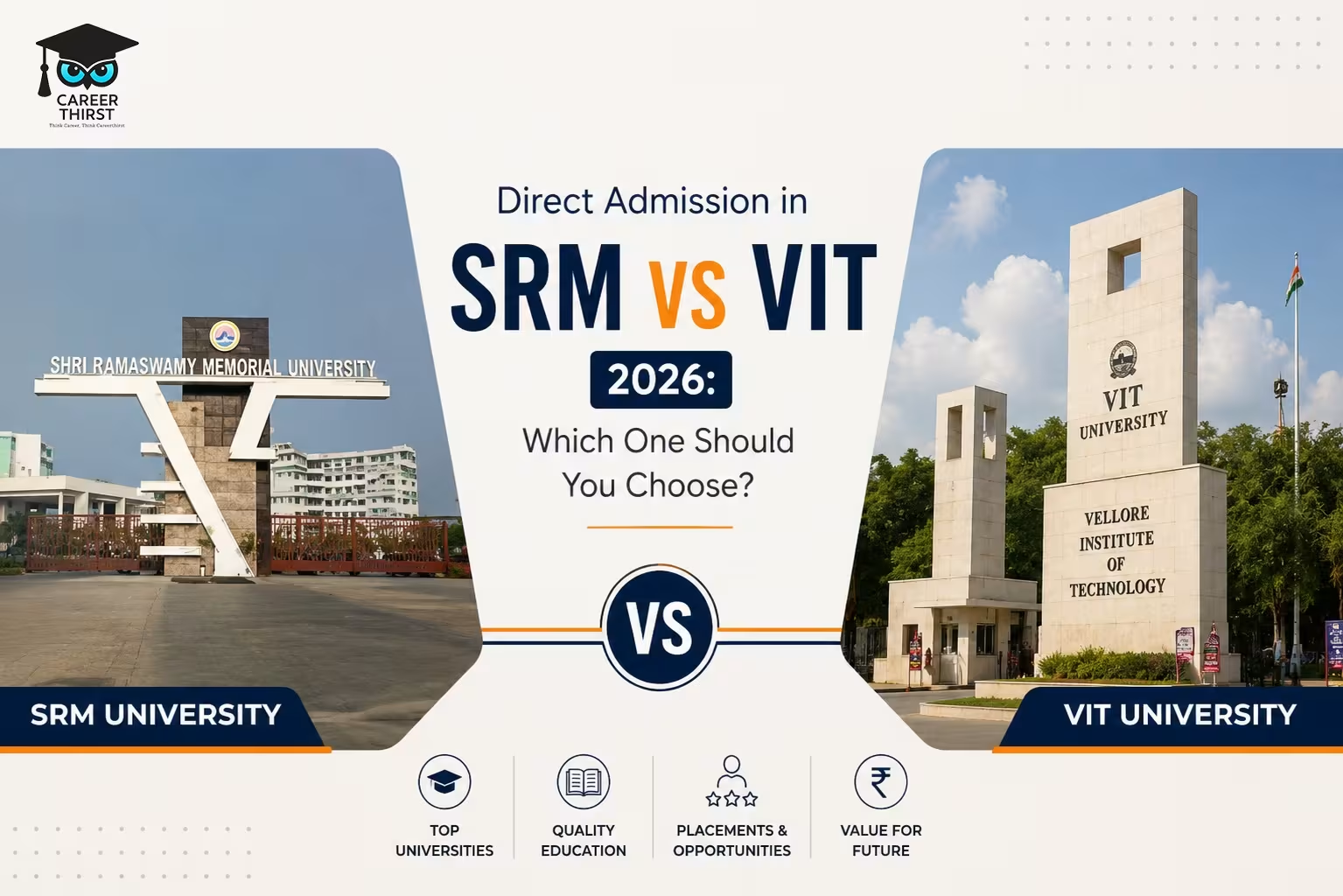
Direct admission in SRM is one of the most searched BTech admission routes for 2026. VIT comes up in almost the same breath. This guide compares both universities side by side. You’ll find eligibility, fees, process, and management quota costs, so you can decide with facts instead of guesswork. Reach out to CareerThirst if you want a counselor to verify seat availability before you commit.
Key Takeaways
- Direct admission in SRM is available for BTech through the management quota. Most campuses don’t require you to clear SRMJEEE at all.
- Eligibility typically sits at 50–60% aggregate in PCM (Physics, Chemistry, Mathematics). This depends on the campus, not a fixed 60% everywhere.
- Total 4-year BTech costs under SRM’s management quota commonly fall in the ₹18–30 lakh range. This depends on branch and campus, so always confirm the current figure directly with SRM before paying anything.
- VIT’s direct-admission route works differently. Most VIT seats still expect a JEE Main, VITEEE, or board-score benchmark. In short, it’s less of a “no-exam” pathway than SRM’s management quota.
- CareerThirst’s counselors can help you compare verified seat availability, fee structures, and documentation for both universities before you apply.
What Is Direct Admission in SRM?
Direct admission in SRM means securing a BTech seat at SRM Institute of Science and Technology through the management quota. This route skips the standard SRMJEEE counseling rounds. It suits students who missed the entrance exam cutoff, applied late, or simply want a faster admission process.
SRM operates multiple campuses, including Kattankulathur, Ramapuram, Vadapalani, Delhi-NCR, Amaravati, and Sonepat. Because of this, “direct admission” can work slightly differently depending on which campus and branch you target. So, it’s worth confirming the exact process for your chosen campus rather than assuming one rule applies everywhere.
Who Is Eligible for Direct Admission in SRM?
Eligibility for direct admission in SRM through the management quota generally requires a pass in Class 12 with Physics, Chemistry, and Mathematics. You’ll also need a minimum aggregate that ranges between 50% and 60%, depending on the campus.
In other words, you don’t need a strict 60% PCM score everywhere. Some campuses accept students at 50%. This makes the route genuinely accessible for students who fall short of SRMJEEE cutoffs.
You’ll typically also need to meet a minimum age requirement, usually 16.5 years by a set date in the admission year. In addition, you’ll need to submit valid ID proof alongside your marksheets. Because these criteria can shift slightly year to year, confirm the current requirement for your target campus before you apply.
How to Apply for Direct Admission in SRM (Step-by-Step)
Applying for direct admission in SRM follows a fairly consistent process across campuses. That said, small details vary by location.
Step 1 — Shortlist your campus and branch. Decide which SRM campus and branch fit your goals, since fees and seat availability differ significantly between them.
Step 2 — Reach out to the admission cell or a verified counselor. Confirm current seat availability and the exact fee structure directly, rather than relying on outdated listings. CareerThirst’s counseling team can help with this step.
Step 3 — Submit your documents. You’ll typically need your Class 10 and 12 marksheets, ID proof, transfer certificate, and passport-size photographs.
Step 4 — Pay the seat confirmation amount. Once your eligibility is verified, you’ll be asked to pay an initial amount to lock your seat.
Step 5 — Complete verification and full fee payment. After document verification, you’ll finalize the remaining fee payment and receive your formal admission letter.
Overall, management quota seats fill up quickly in high-demand branches like CSE and AI/ML. So, starting this process early gives you meaningfully better options.
Direct Admission in SRM Fees for a 4-Year BTech (Including Hostel Costs)
Direct admission in SRM fees for a 4-year BTech program commonly total somewhere between ₹18 lakh and ₹30 lakh. This depends on the branch, campus, and year of admission. Tuition alone is often quoted in the ₹4–8 lakh per year range.
Watch Out for Extra Charges
Some high-demand branches carry an additional one-time development or infrastructure charge on top of tuition. This is exactly where students need to be careful. Any “extra” charge beyond published tuition should come with written confirmation from the university itself, not just a verbal quote from a third party.
Hostel Costs Add Up
Add hostel accommodation, and total costs typically rise further. That’s because hostel fees at SRM’s larger campuses generally run into six figures annually, depending on room type and mess plan. Since fee structures are revised yearly and vary by campus, treat every number here as an indicative range. Confirm the exact current figure with SRM directly, or through CareerThirst’s counselors, before you commit any payment.
Direct Admission in SRM Through Management Quota: Fees by Branch (Including CSE)
Direct admission in SRM through the management quota costs more for high-demand branches. Computer Science Engineering and AI/ML typically sit at the top of the fee range. Meanwhile, core branches such as Electronics and Communication, Mechanical, or Civil Engineering are generally priced lower than CSE. That’s because demand and expected placement outcomes influence how universities price management quota seats.
As a result, a core engineering branch at SRM can meaningfully reduce your total cost if budget matters more than branch preference. It still keeps you within the same university’s ecosystem and placement cell. Always ask for a branch-wise fee breakdown in writing before choosing, since verbal quotes can vary between counselors and change with seat demand.
Direct Admission in SRM vs VIT 2026: Key Differences
Direct admission in SRM and VIT differ most in how strictly each university ties admission to an entrance exam score. Here’s a side-by-side comparison to help you weigh both options.
Feature | SRM | VIT | Best For |
Entrance exam requirement | Management quota generally waives SRMJEEE | Most seats still expect a JEE Main, VITEEE, or board-score benchmark | Students who want to skip an entrance exam entirely — SRM |
Eligibility | 50–60% PCM, varies by campus | Typically 60%+ aggregate PCM/PCB | Students with a lower PCM percentage — SRM |
Campuses | 7 campuses across India (Chennai, Delhi-NCR, Andhra Pradesh, and more) | Vellore and Bhopal (Vellore Institute of Technology), plus separate Pune institute of the same acronym | Students wanting more location choice — SRM |
Fee range (4-year BTech) | Broadly ₹18–30 lakh depending on branch | Fee structures are grouped by category and program; core branches are often positioned lower | Budget-conscious families comparing options — confirm both directly |
Direct-admission flexibility | Broader management quota intake, less exam-dependent | Direct routes usually reserved for exceptional scorers rather than a general no-exam quota | Students without a strong exam score — SRM |
Either way, the right choice depends on your PCM percentage, your branch preference, and how important a no-entrance-exam pathway is to you. Overall, SRM’s management quota is generally the more accessible route if you don’t have a strong entrance exam score. VIT, on the other hand, tends to reward students who already have a competitive score to work with.
Direct Admission in SRM Chennai: What’s Different at the Flagship Campus
Direct admission in SRM Chennai (Kattankulathur) works through the same core management-quota process as other SRM campuses. However, it comes with heavier competition because it’s the flagship campus. Kattankulathur offers the widest range of specializations, including CSE, AI/ML, ECE, and several niche programs. As a result, management quota seats in popular branches fill up faster here than at SRM’s newer campuses.
For 2026, applications typically open around November and close by May. So, early applicants generally get better branch and fee outcomes than those who apply closer to the deadline. If Chennai isn’t essential to your plans, comparing SRM’s other campuses can sometimes open up the same degree at a lower cost.
How CareerThirst Helps With Direct Admission in SRM and VIT
CareerThirst’s counselors field regular questions from students comparing SRM and VIT side by side every admission season. In our experience, the biggest gap isn’t a lack of information. Instead, it’s too much unverified information from multiple sources quoting different numbers.
We verify current seat availability, fee structures, and eligibility criteria directly before sharing them with students. This way, you’re working from confirmed facts rather than a mix of outdated listings and consultancy sales pitches. We also help you weigh branch and campus trade-offs against your specific PCM score and budget, rather than pushing you toward whichever option pays the highest referral commission.
Conclusion
Direct admission in SRM gives students a genuinely accessible, largely exam-free path into a well-known private university. VIT, on the other hand, tends to suit students who already have a competitive entrance score to work with. Whichever direction fits your PCM percentage and budget, verify every fee and eligibility detail directly before you commit any payment. CareerThirst can help you compare confirmed SRM and VIT options side by side — visit https://careerthirst.com/ to talk to a counselor before you decide.
Is direct admission possible in SRM, including for BTech?
Yes. SRM offers direct admission for BTech through its management quota, which generally doesn’t require an SRMJEEE score, only a Class 12 PCM pass meeting the campus-specific minimum percentage.
How do I apply for direct admission in SRM?
Shortlist your preferred campus and branch, confirm current seat availability with the admission cell or a verified counselor, submit your Class 10 and 12 documents, pay the seat confirmation amount, and complete verification before your final fee payment.
What is the fee for direct admission in SRM for a 4-year BTech program, with and without hostel?
Total costs commonly range from ₹18 lakh to ₹30 lakh over 4 years depending on branch and campus, before hostel charges. Hostel accommodation adds a further annual cost on top of tuition, so confirm the current combined figure directly with SRM
What are the SRM management quota fees, and do they vary by branch like CSE?
Yes. CSE and AI/ML branches generally sit at the higher end of SRM’s management quota fee range, while core branches like ECE, Mechanical, or Civil typically cost less for the same 4-year BTech degree.
Can I get admission in SRM without 60% in PCM?
Often, yes. Several SRM campuses accept a minimum of 50% aggregate in PCM for management quota seats, though the exact cutoff depends on the specific campus you’re applying to.
Can I get a free seat in SRM University?
SRM does offer limited merit-based scholarships that can reduce or occasionally waive tuition for exceptional academic performers, but a fully free seat through the management quota route specifically is uncommon — check current scholarship criteria directly with SRM.
Is direct admission open for SRM Chennai campus in 2026?
Yes, direct admission through the management quota is open for SRM’s Chennai (Kattankulathur) campus for the 2026 intake, with applications typically running from around November through May.
Who can I contact for help with SRM direct admission?
Rather than relying on unverified numbers circulating online, reach out to CareerThirst’s counseling team through careerthirst.com — we verify current seat availability and fee details directly before connecting you with the right admission contact.